PRODUCTS
250S162 20g / 18g / 16g
350S162 20g / 18g / 16g
362S162 20g / 18g / 16g
550S162 20g / 18g / 16g
600S162 20g / 18g / 16g
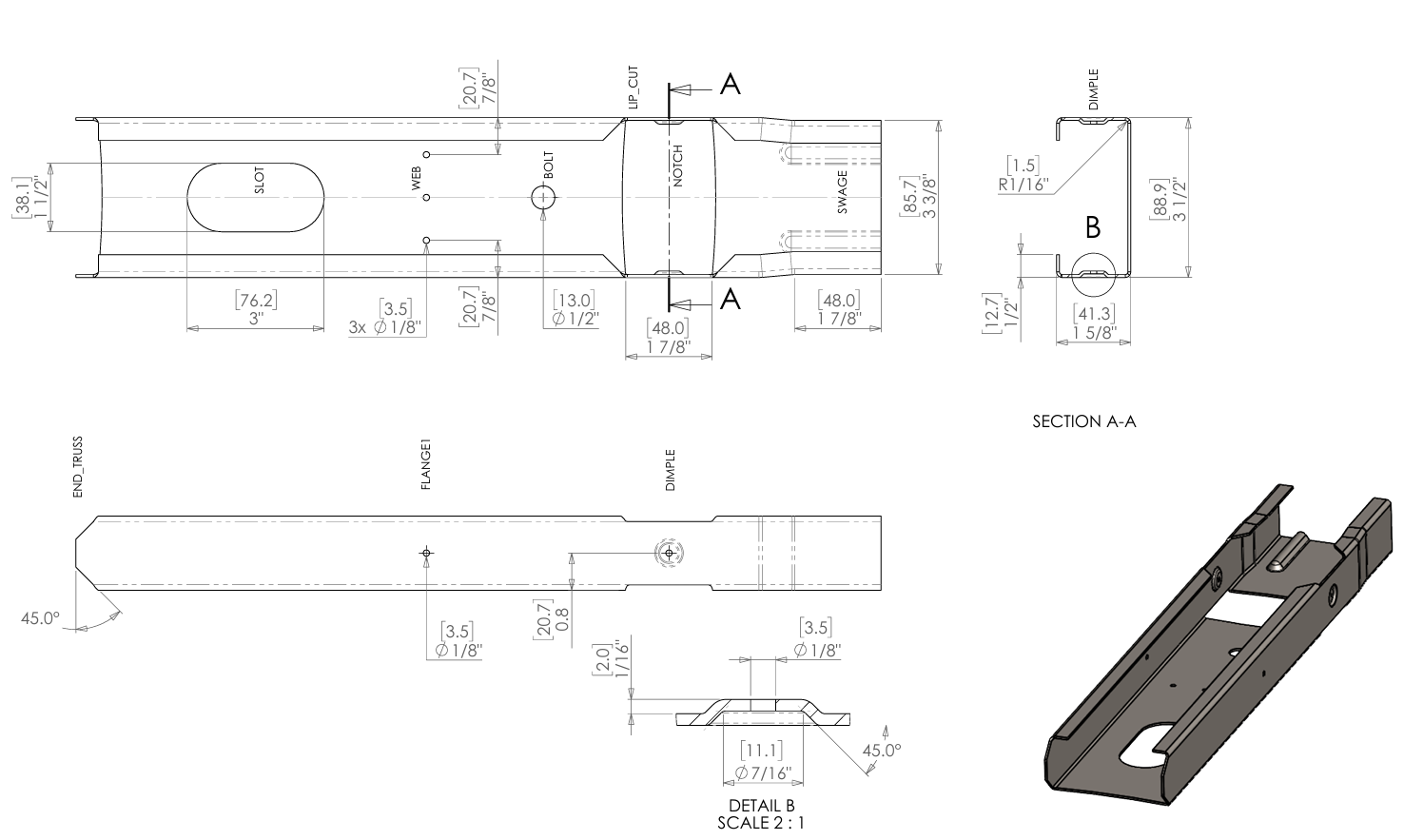
2.5” Stud Profile with 1.62” flange
3.5” Stud Profile with 1.62” flange
3.62” Stud Profile with 1.62” flange
5.5” Stud Profile with 1.62” flange
6” Stud Profile with 1.62”flange
ICC Report
Process certification and compliance.
SOFTWARE
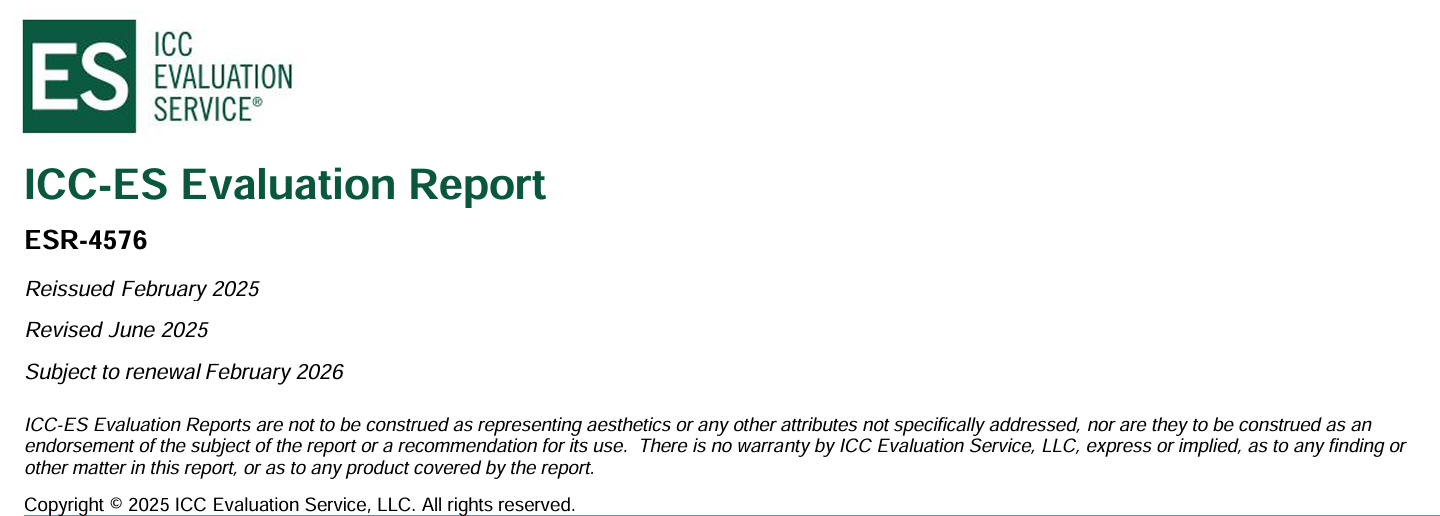
Steel stud detailing software specific to Cold Form steel production
STEEL
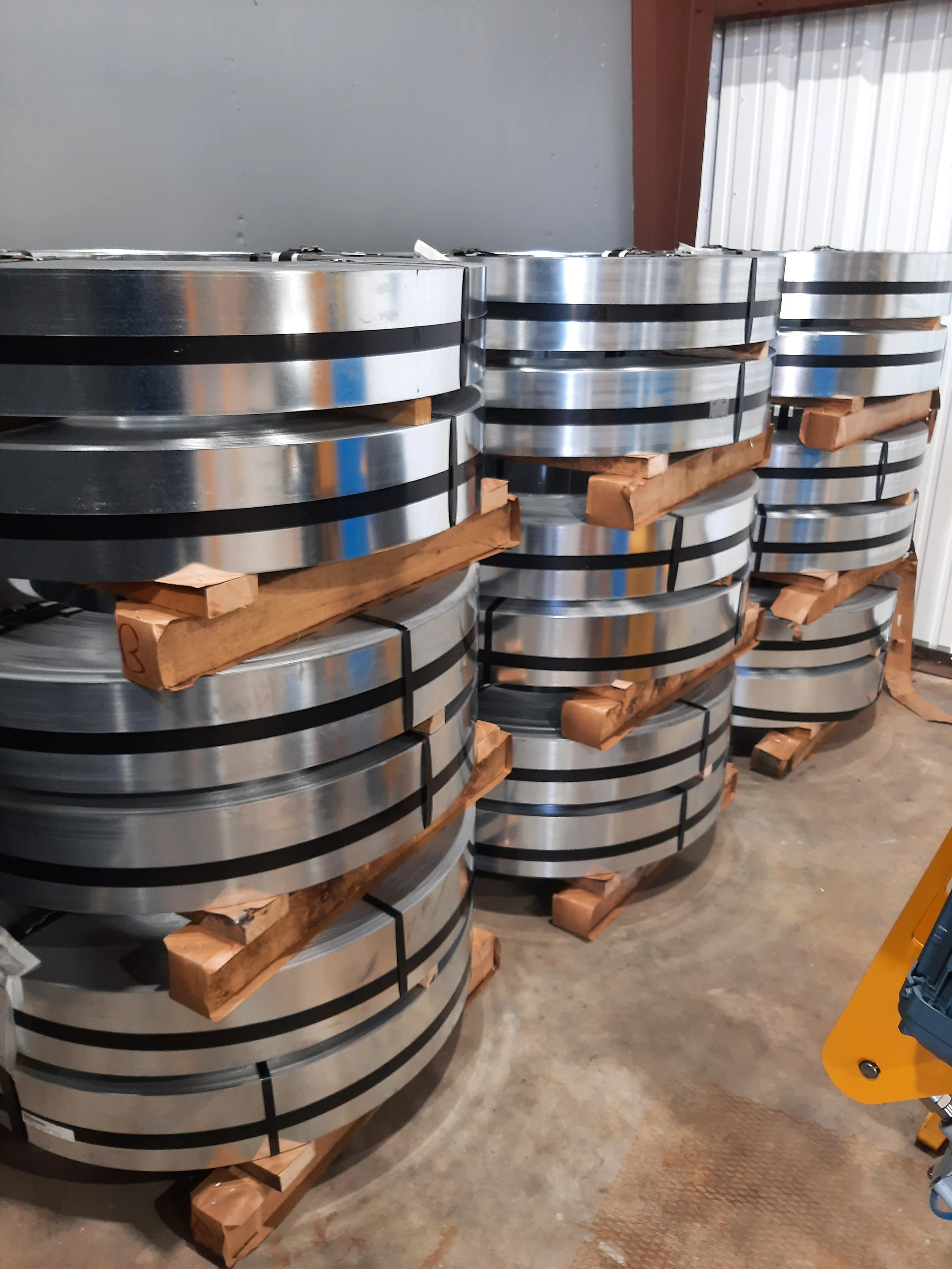
Structural Members: The steel of the structural members conforms to ASTM A1003 Structural Grade 33 Type H (ST33H), Structural Grade 50 Type H (ST50H) or ASTM A653 HSLAG Grade 80. As an alternative, the steel of the structural members conforms to ASTM A653 Structural Steel (SS) Grade 33 or SS Grade 50 Class1. Structural framing members have a minimum protective coating of G60 or AZ5 as described in ASTM A653 and ASTM A792, respectively.
Non-structural Members: The steel of the non-structural members conforms to ASTM A1003 Structural Grade 33 Type L (ST33L), Structural Grade 50 Type L (AT50L), or ASTM A653 HSLAS Grade 80. Non-Structural framing members have a minimum protective coating of G40 or AZ50 as described in ASTM A652 and ASTM A792, respectively.
Substitution of materials found in AISI S100 Section A3.1 for the 2021 and 2018 IBC (Section A2.1 for the 2015 and 2012 IBC/IRC) which have equal or better material specifications and grade is acceptable.
PANELIZATION
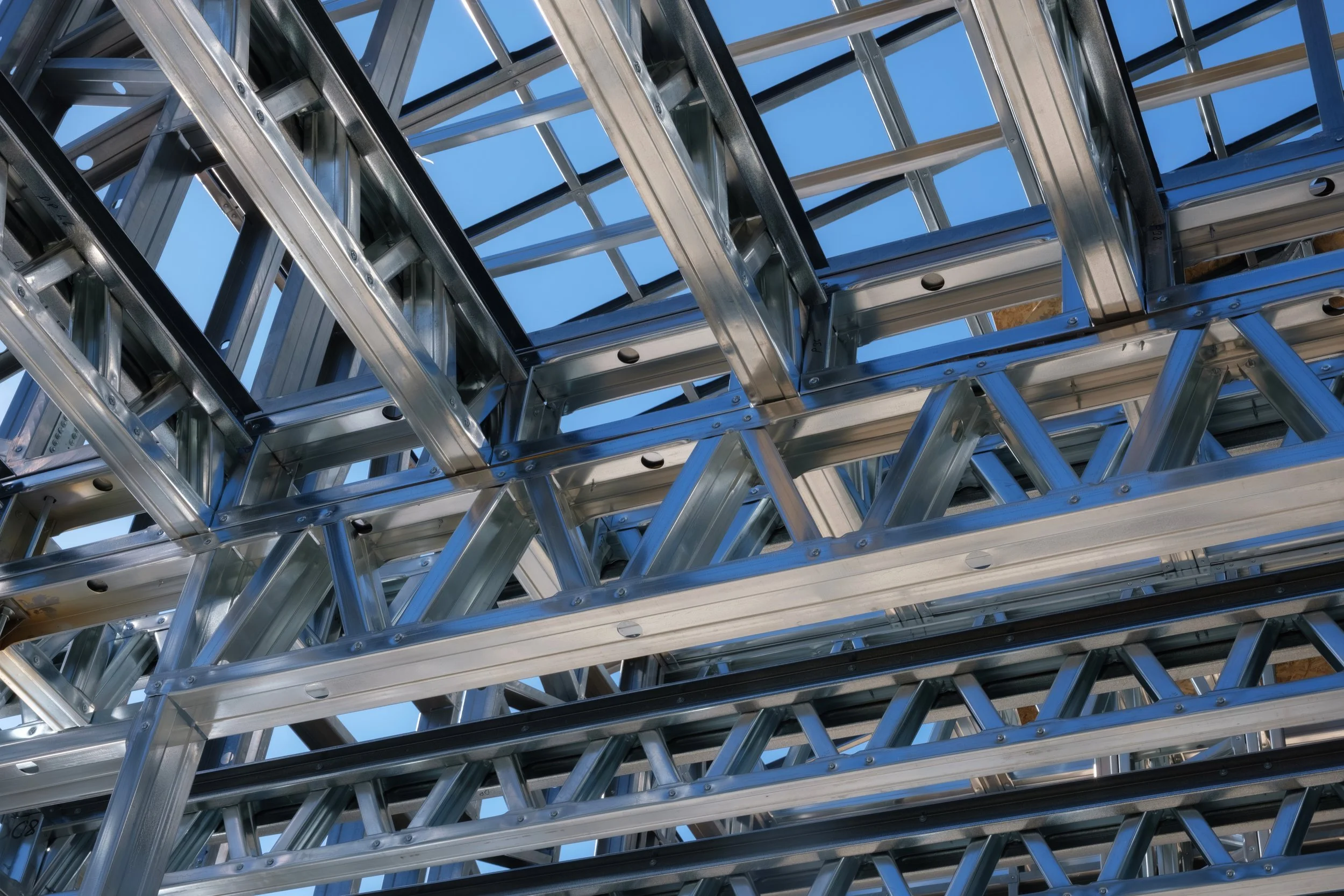
Light Gauge Steel (LGS) panelization is an off-site construction method where wall, floor, and roof components are engineered, cold-formed, and assembled into panels in a controlled factory setting. These pre-fabricated panels are then delivered to the site for rapid, precise assembly, significantly reducing construction time, labor costs, and job site waste. Key benefits include high structural strength, fire resistance, and improved energy efficiency.
Key Aspects of LGS Panelization
Production Process: LGS components are fabricated using automated machinery that cuts, punches, and shapes steel (ranging from 1mm to 3mm thickness). These are assembled into panels in jigs to ensure high precision and consistency.
Efficiency & Speed: Panelized systems are designed for quick on-site erection, often referred to as "snapping together," which can drastically shorten project timelines.
Quality Control: Because panels are built in a controlled, indoor environment, they are less susceptible to weather delays and human error.
Sustainability: The process generates less on-site waste, often reducing the need for large dumpsters on site.
Applications: LGS panelization is used for residential, commercial, and modular construction.
Advantages Over Traditional Methods
Reduced Labor: As demand for skilled labor increases, LGS panelization helps overcome shortages.
Durability: Steel is non-combustible and termite-resistant.
Precision: 3D modelling and automated production allow for tight tolerances, which reduces errors in the fie
THE JOB SITE
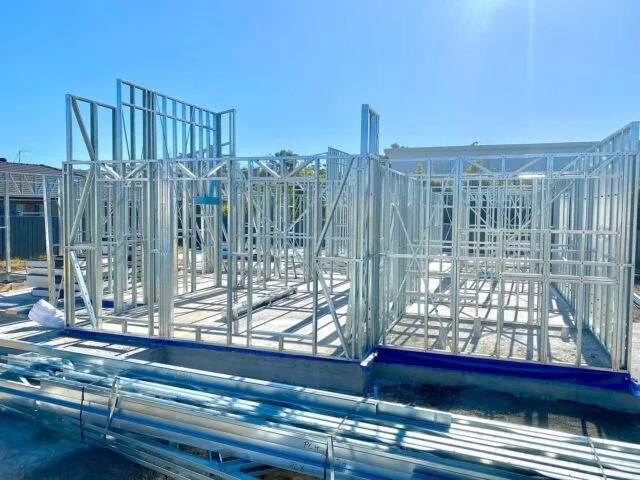
Sequenced production means parts for the building can be delivered to the jobsite as they are needed. This eliminates extra space needed for laydown and storage.
The intent is to reduce both time and resources spent on the jobsite. This reduction equates to substantial savings.